
Ingredients AND Evidence
What Is Ozonized Glycerin (OG)?
Obtained patents for the manufacturing method, applications, and formulations of a novel ozonized compound discovered through the reaction of glycerin and ozone.
- Viscosity: Comparable to glycerin or slightly lower, yet higher than BG.
- Texture: Slightly less tacky than glycerin.
- Stability: Ozonized glycerin is odorless and colorless, with high stability against temperature fluctuations.
Ozone (O₃) is formed when one additional oxygen atom attaches to molecular oxygen (O₂).
O2+O=O3
Functional Benefits (Restores the Skin Barrier)
Enhances the production of filaggrin, which becomes NMF; ceramides, the key intercellular lipids; and involucrin, the extracellular envelope protein (in vitro)
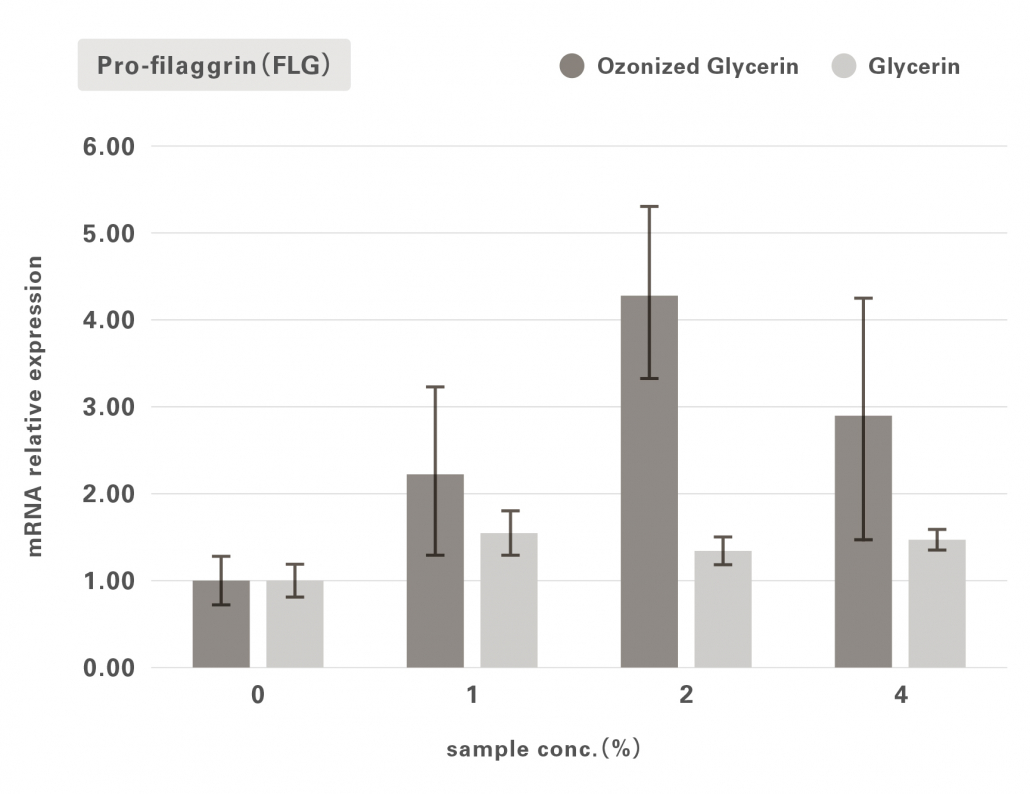
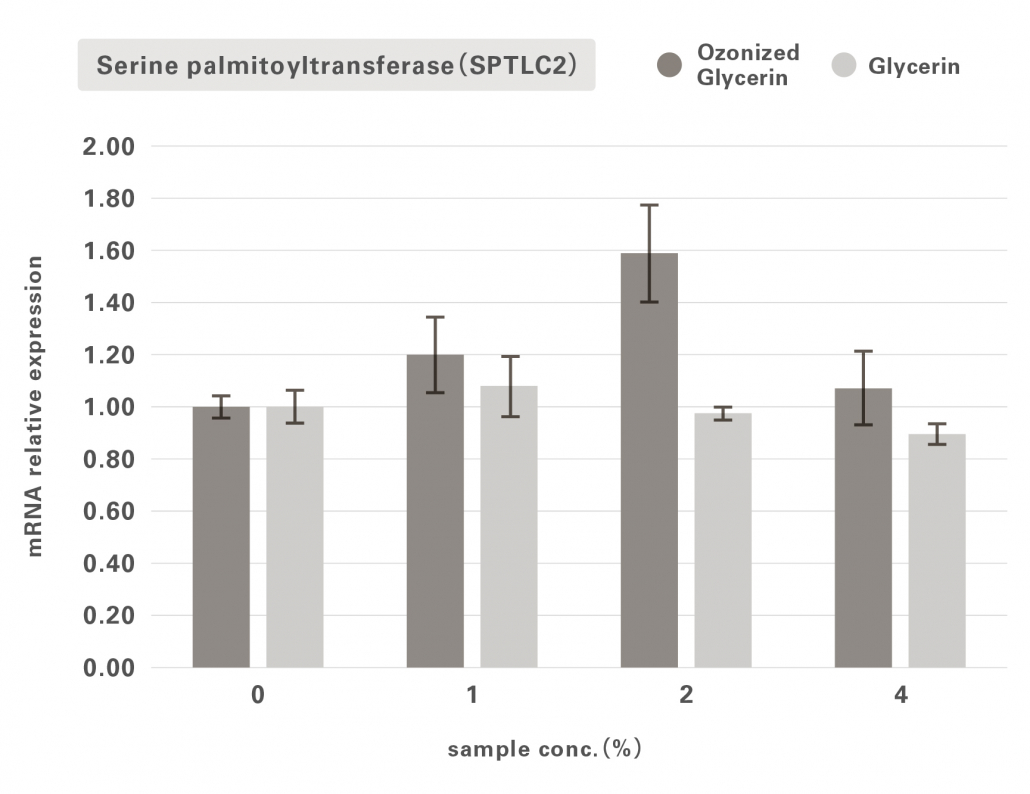
Compared with glycerin, ozonated glycerin was shown to increase filaggrin (left) and ceramides (right).
It has also been confirmed to activate multiple other factors, including involucrin.
Functional Benefits (Enhances Autophagy Activity)
Activates autophagy (LC3-II), improving the quality of cellular renewal (differentiation) and promoting the degradation of melanosomes (in vitro).
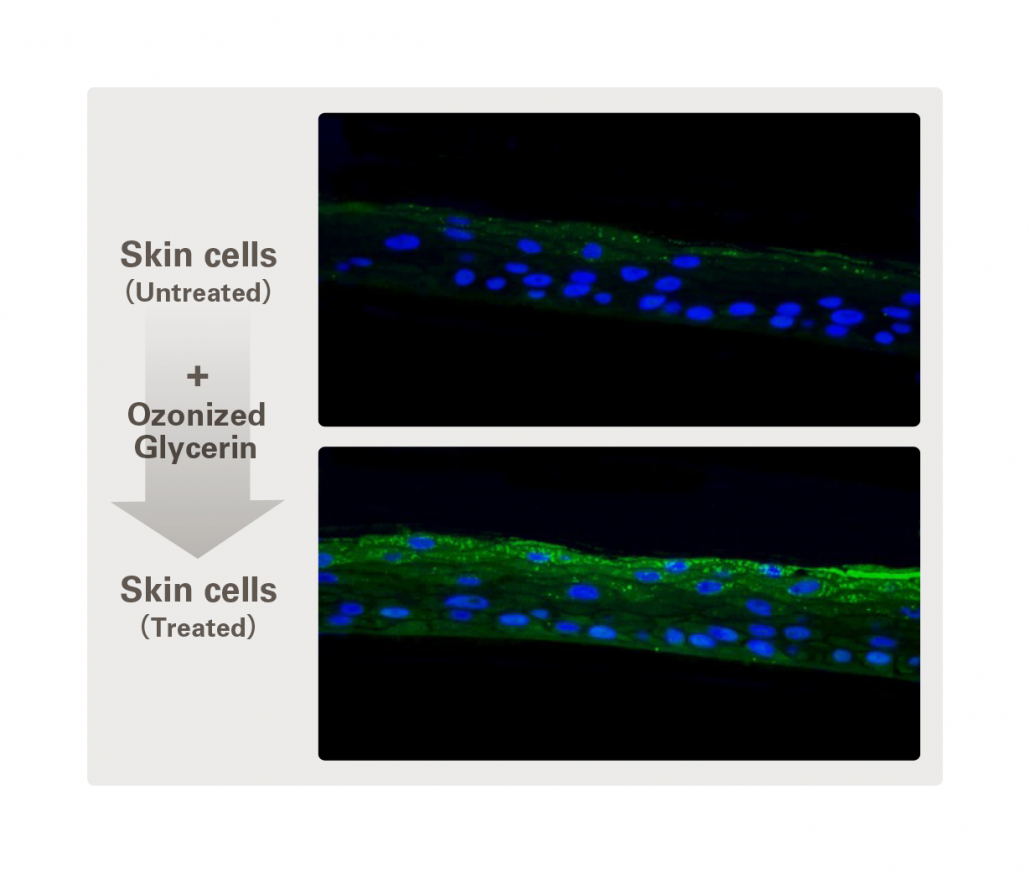
The green-stained areas indicate autophagy (LC3-II).
Topical application of ozonized glycerin was found to enhance autophagy activity in skin cells.
Functional Benefits (Anti-Inflammatory and Antioxidant Effects)
Activates Nrf2, enhancing the production of antioxidant molecules such as glutathione and HO-1 (heme oxygenase), which support skin homeostasis and strengthen the skin’s ability to resist oxidative stress and inflammation(in vitro).
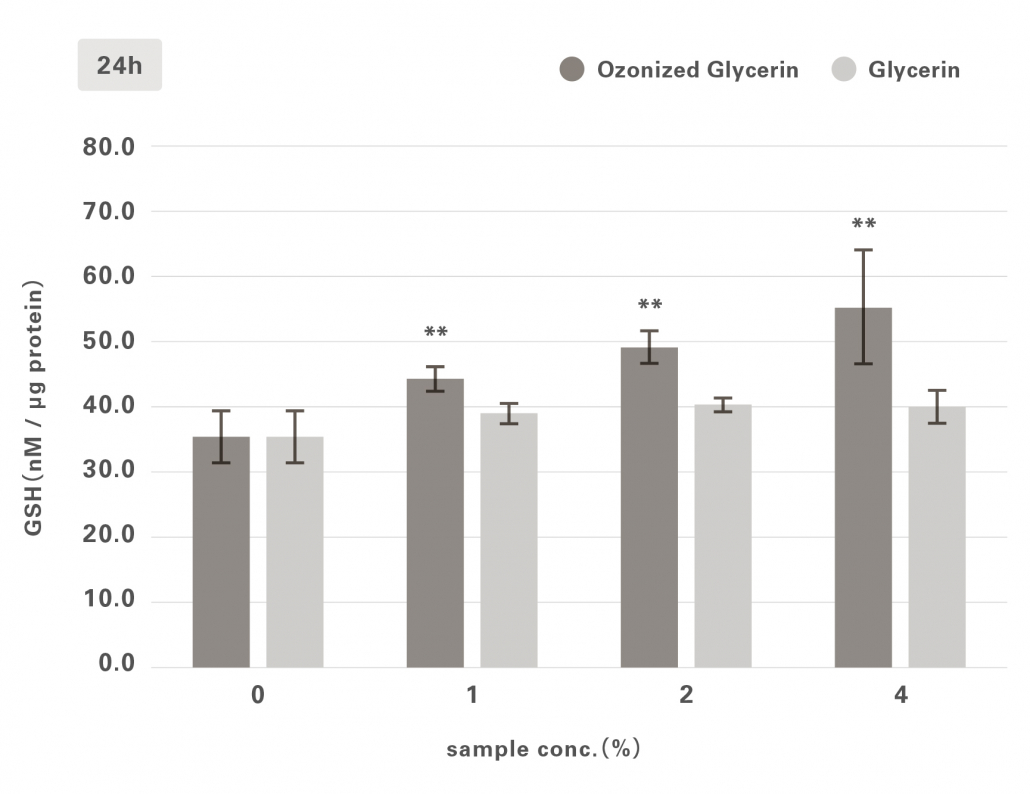
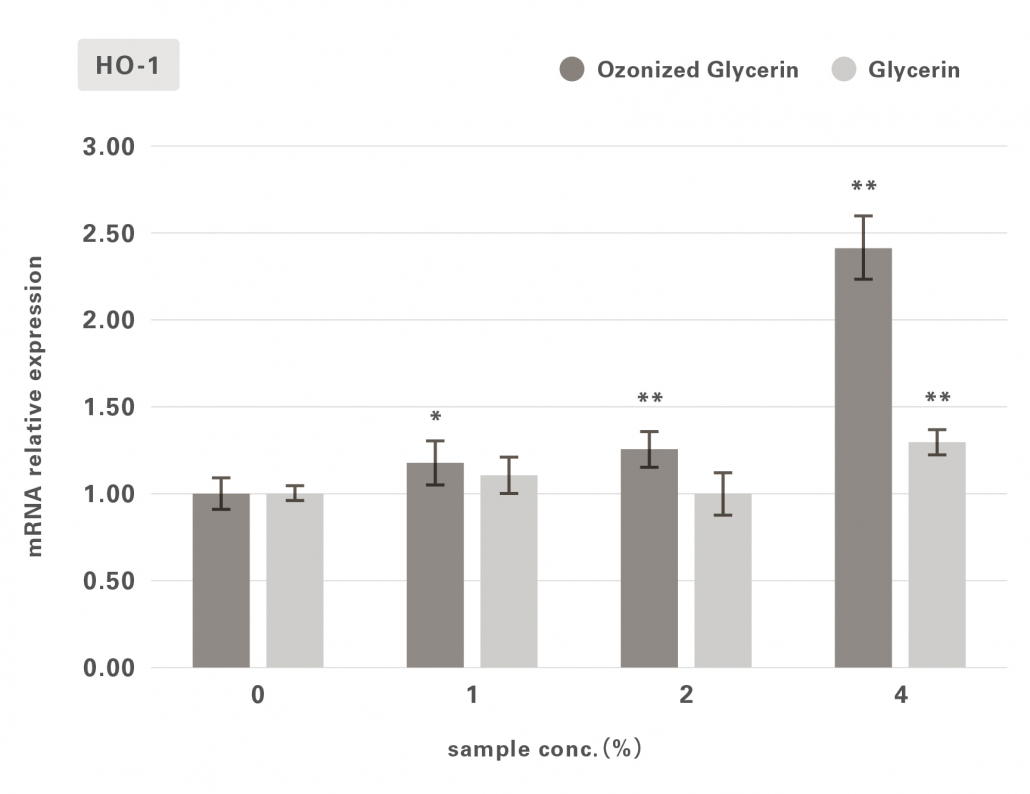
Compared with glycerin, ozonized glycerin was shown to increase glutathione (left) and HO-1 (right).
Functional Benefits (Human Use Study)
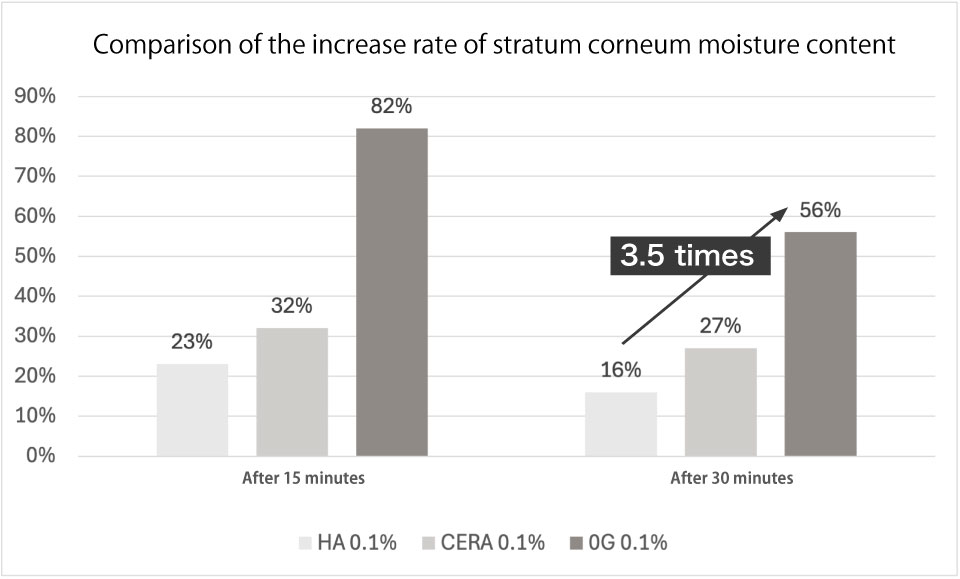
Compared with well-known moisturizing ingredients such as hyaluronic acid (HA) and ceramides (CERA), ozonized glycerin demonstrates approximately 3.5 times the moisture-retention capacity of HA and about 2.4 times the barrier-support index of CERA.
Conventional moisturizing ingredients have largely focused on either supplying moisture or reinforcing the barrier. Ozonized glycerin works directly on the molecular environment of the stratum corneum, providing high-level support for both moisture retention and barrier function.
3.5 times the moisture-retention capacity of hyaluronic acid.
2.4 times the skin-barrier support of ceramides.
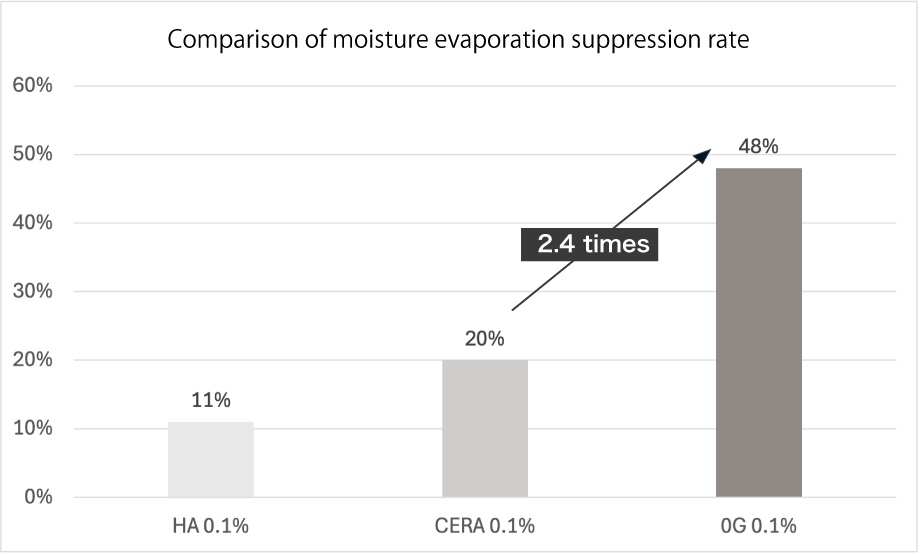
▪️N = 7 (men and women in their 20s–50s), conducted in January 2025
▪️Bulk: Carbomer gel containing each ingredient
▪️Test area: Forearm
▪️Measurement devices: Corneometer, Tewameter
Functional Benefits (Penetration Study)
The penetration study shows that OG distributes more uniformly and evenly throughout the cross-section.
OG enhances the uniform penetration of oil-soluble ingredients, which can improve both the spreadability and the overall performance of emulsions, creams, and serums.
Appearance after 5 minutes
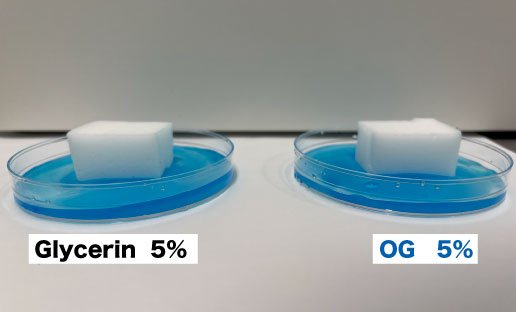
A sponge was soaked in 5% solutions of both glycerin and OG.
Cross-section after 5 minutes
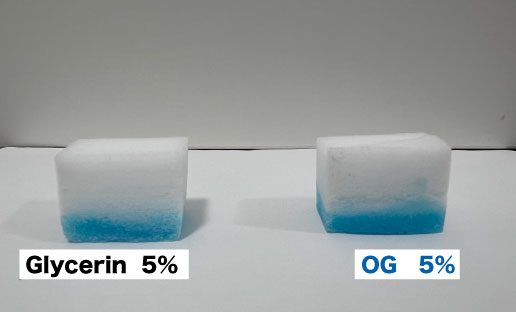
The 5% OG solution on the right shows more uniform penetration.
Method
①A gel containing 5% OG or glycerin and 2% squalane was dyed blue, and a melanin sponge was placed on top to observe penetration.
②After 5 minutes, the sponge was removed, cut in half, and the cross-section was examined.
Functional Benefits (Preservative Efficacy Test)
Ozonated glycerin demonstrates strong preservative efficacy.
When five standard strains were intentionally inoculated into ozonated glycerin, the microbial count dropped to below 100 CFU/g within one day and showed no regrowth through day 28 of incubation.

ChatGPT:
▪️Test period: June 2024
▪️Test facility: Eisei Microbial Research Center Co., Ltd.
Test conducted in accordance with ISO 11903
